Our Keynote Speakers
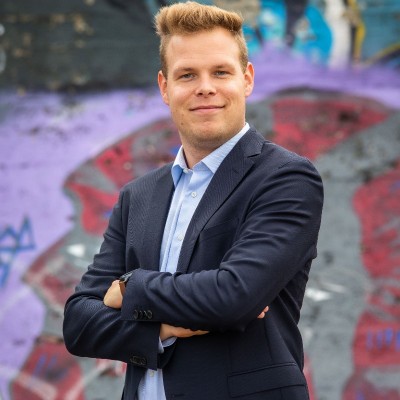
Jordy Van Landeghem
KU LeuvenTalk 1: Parse, Reflect, Retrieve, Compile: An Agent Stack for Enterprise Document AI
Agents are reshaping Document AI — but can they be trusted in production? This tutorial walks through the agent stack for enterprise documents, from parsing to retrieval to reasoning, exposing where current systems silently fail and what it takes to close the gap. Drawing on recent benchmarks (ParseBench, MADQA), open-source tools (DRAG), and lessons from deploying agentic workflows in industry, we examine the tension between flexibility and reliability: agents that self-correct through visual reflection, agents that learn search strategies from experience, and the emerging need for systems that compile learned intelligence into deterministic, auditable pipelines. We conclude with open research problems and an invitation to collaborate.
Speaker's Bio: JORDY VAN LANDEGHEM received an M.A. degree in Linguistics (2015), an M.Sc. degree in Artificial Intelligence (2017), and a Ph.D. degree in Computer Science (2024), all from KU Leuven, Belgium. He completed research internships at Oracle and Nuance Communications and spent seven years as Lead AI Research Engineer at Contract.fit, a European IDP start-up. His doctoral research on "Intelligent Automation for AI-Driven Document Understanding" spans probabilistic deep learning, calibration, uncertainty quantification, and out-of-distribution robustness. He spearheaded the DUDE benchmark and the ICDAR 2023 competition, with further publications at ICML, ICCV, and WACV. Most recently a Senior ML Engineer at Instabase leading GenAI and Agentic AI efforts, while collaborating on MADQA, he now runs an independent global AI/ML consultancy from Belgium (Probably Approximately Human BV).
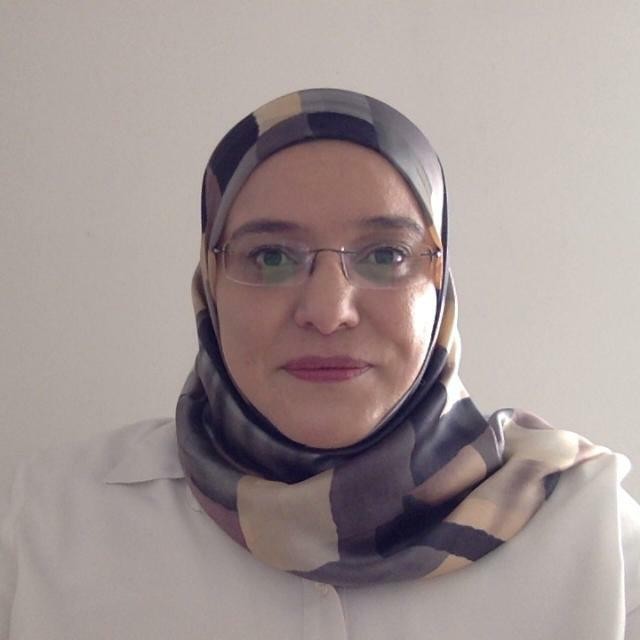
Nibal Nayef
Kestya, Rennes, FranceTalk 2: From Retrieval to Reasoning: The Evolution of RAG-based Systems for Document-Centric AI
Retrieval-Augmented Generation (RAG) has become a key paradigm for enabling question answering over large and heterogeneous document collections. It has evolved from early single pass retrieval–generation approaches into a broader class of systems that integrate retrieval with reasoning, including emerging approaches often referred to as agentic RAG. This talk provides an overview of this evolution toward more iterative and adaptive methods. We discuss key design principles, including data ingestion, retrieval strategies, context selection, and answer generation. A particular focus is placed on document-centric scenarios, where knowledge is derived from documents with diverse layouts, document images, and other modalities. In these settings, system performance depends not only on retrieval and generation, but also on document understanding and representation techniques. The presentation also discusses key challenges in building RAG systems and outlines directions for future research and development. The goal is to provide a conceptual framework and practical insights for designing next-generation RAG systems.
Speaker's Bio: NIBAL NAYEF is a senior researcher in document analysis and machine learning, working at the intersection of document intelligence and AI systems. She currently consults on data science and AI solutions, including RAG-based assistants for education and enterprise applications. Her work covers deep learning and end-to-end ML system development, from research to production. At MyScript, she developed models for layout analysis of handwritten documents, mathematical expression recognition, gesture recognition, and writer adaptation using GNNs, Transformers, LSTMs, and MLPs. Earlier, at the L3i Laboratory, University of La Rochelle, she worked on document image analysis using CNN- and FCN-based approaches, as well as on document image quality assessment and enhancement. She led the creation of several benchmarks for multilingual document image analysis and quality assessment, including the widely used RRC-MLT-2017 and RRC-MLT-2019 datasets. She received her PhD in computer science from RPTU University of Kaiserslautern-Landau. Her research interests include document-centric AI, NLP, and data-driven solutions for real-world applications..

Brandon Smock
Kensho TechnologiesrTalk 3: Why Haven’t We Solved OCR?
Today's frontier models and agentic systems are clearly more capable than ever at parsing documents. So why does something as basic as OCR still not appear to be reliably solved? In this talk, we will touch upon some of the inherent reasons why document OCR is so challenging. Then we'll turn our attention to the state of the research field and examine where and why progress might be stalling. Finally, we'll discuss several places where I believe we as a research community should consider putting more attention if we want to drive further progress on this foundational problem.
Speaker's Bio: BRANDON SMOCK is a Senior Applied Scientist for Document Intelligence at Kensho Technologies, with deep expertise in machine learning and algorithm development. During his tenure at Microsoft as a Principal Applied Scientist, he spearheaded the development of the Table Transformer (TATR), a state-of-the-art deep learning approach to recognizing and extracting data from tables in unstructured documents. The Table Transformer models have since been downloaded over two million times in a single month on Hugging Face, placing them among the most popular object detection models available. His work is characterized by a strong focus on scalable, data-centric machine learning, including automated cleaning of large-scale crowd-sourced data and the creation of realistic synthetic training data. Brandon has presented his work at venues including CVPR and ICDAR, and continues to push the boundaries of document intelligence research.
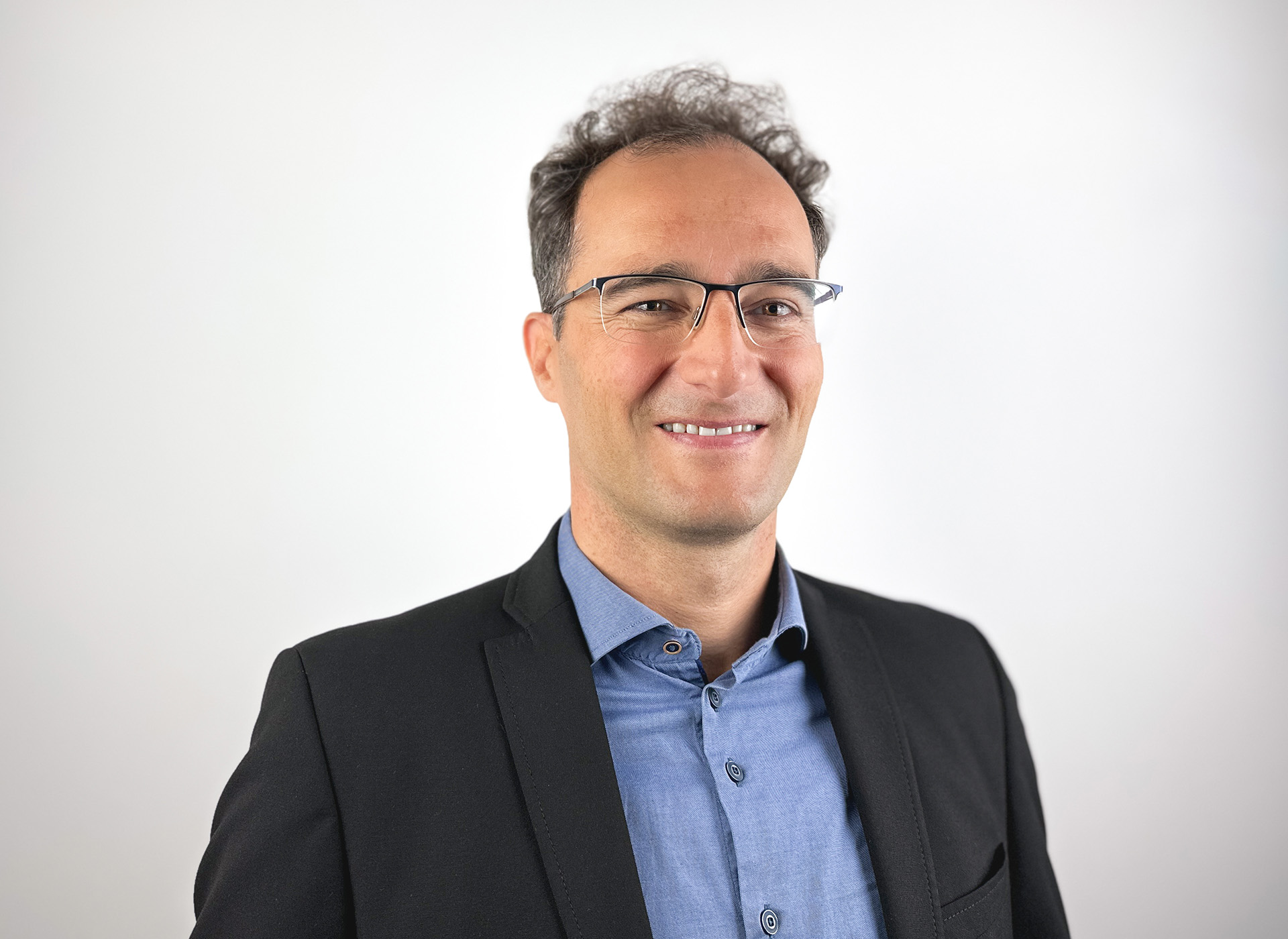
Darko Obradovic
DFKI KaiserslauternTalk 4: Beyond Accuracy: Confidence and Reliability in Industrial DAS
High model accuracy is often treated as the main measure of progress in Document Analysis Systems. In industrial applications, however, even small error rates can be unacceptable. This talk looks beyond aggregate accuracy and explores the mechanisms needed to operate DAS reliably in production: confidence estimation, verification, quality control, and the trade-off between automation and risk. It also examines how these ideas become more difficult as systems increasingly rely on LLMs and agents. The focus is not only on how well a model performs, but on what it takes to turn model outputs into dependable production decisions.
Speaker's Bio: DARKO OBRADOVIC first worked for 8 years as a Researcher at the German Research Center for AI (DFKI). In this time he received three Best Paper Awards at international conferences and completed his PhD in network and text mining for Social Media. Then he worked for nine years in the German SME Insiders Technologies as product manager and Head of AI in document analysis systems and Conversational AI. This covered multiple domains from finance to industry, and involved lots of requirements engineering for product and first-hand solution engineering. Since one year he's back to DFKI and works as a manager and senior researcher in industry projects on multimodal document understanding, RAG and Agentic AI.